
The Problem: "Acquisition Silo"
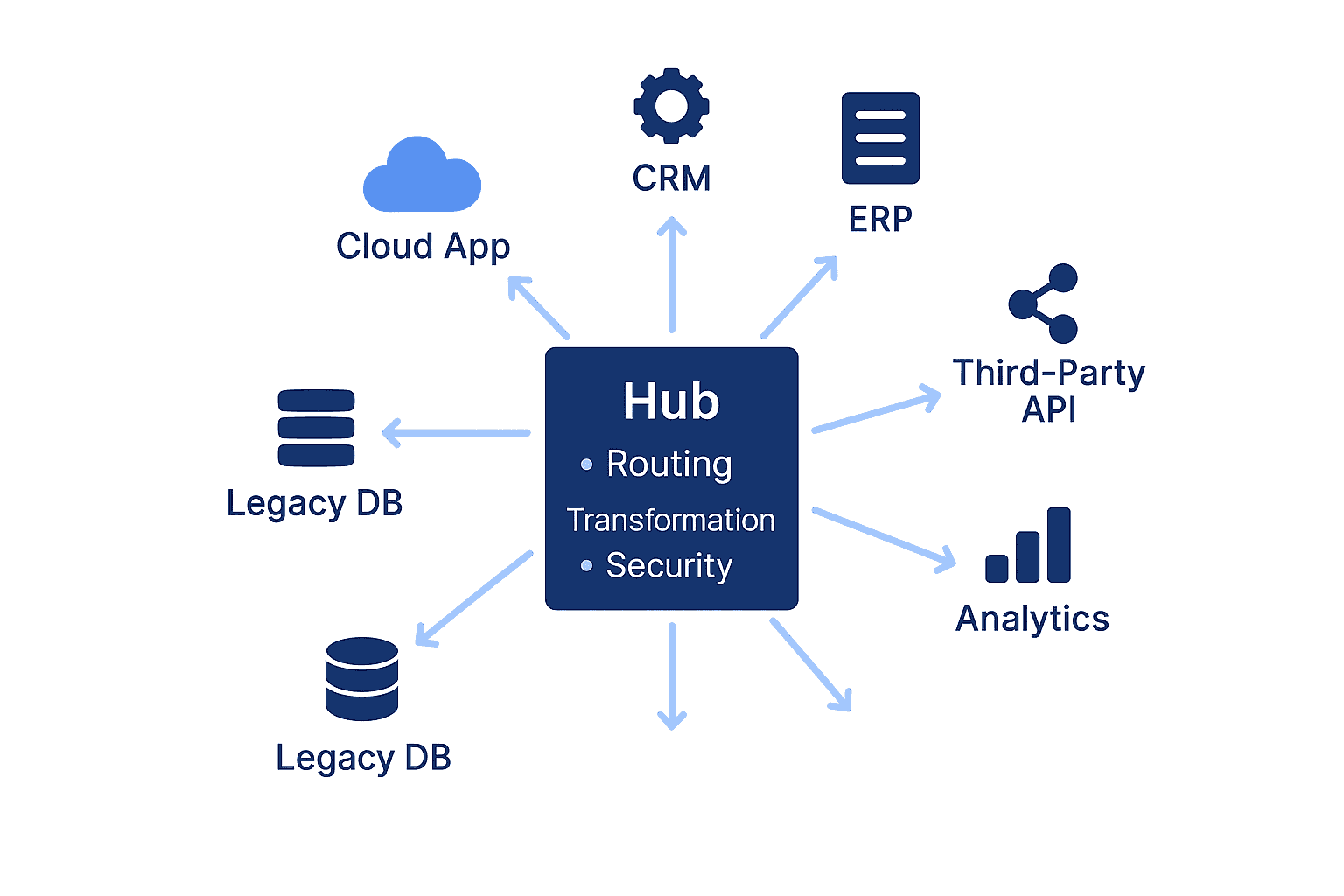
Over years of growth, PowerSchool acquired five distinct Talent products. Each arrived with its own legacy import logic. This created a "Product Tax" for our customers- districts using the full suite were forced to manage five separate import files and five redundant workflows, leading to massive data discrepancies and administrative burnout.
Uncovering the Gaps through Deep Discovery
While the lack of interoperability was obvious, the specific feature gaps were hidden. I led a 4-week deep-discovery phase, conducting 15+ customer interviews and internal stakeholder workshops with Sales and Support teams. This research shifted our focus from a simple "copy-paste" of legacy features to a complete platform rethink. We uncovered three critical gaps that became the pillars of the new DIT:
The Format Friction: Customers were spending hours reformatting data to fit our rigid schemas. Competitive benchmarking revealed that we were the only ones requiring a proprietary format. I identified the need for an ERP-agnostic engine to accept 3rd-party exports (Workday, Oracle) as-is.
The Visibility Void: Discovery revealed that enterprise districts were terrified by the "Black Box" nature of legacy imports. Traceability was a 'must-have' for their security audits. I prioritized a row-level Audit Trail to provide the 100% traceability required for state compliance.
The Automation Vacuum: Through workshops with internal Support teams, I realized manual uploads were our biggest cost driver. This discovery led me to prioritize Automated SFTP Ingestion as a core pillar of the MVP, not a 'nice-to-have' for later.
Building the Data Platform
I worked with UX to design a unified Data Import Tool (DIT) that would finally bridge these gaps. I collaborated with Solution Architects and Engineering to implement a core Event Bus architecture (MOTU Platform). We didn't just build a uploader; we built a System of Intelligence:
The Schema-Agnostic Mapping Engine: I defined the requirements for a dynamic mapping layer that could "read" disparate ERP exports and map them to our internal data standards without manual code changes.
The Validation Layer: Developed a robust, row-level validation engine that provided real-time feedback to users, ensuring data integrity before it ever touched the Event Bus.
Decoupled Scalability: By utilizing the Event Bus, we ensured that the ingestion engine remained independent of the five subscriber products, allowing each product team to scale their consumption logic without affecting the core platform..
GTM Strategy
The Beta Program: Orchestrated a 3-month Beta with key enterprise accounts to stress-test the validation logic and ERP-agnostic mapping.
Enablement: Led the internal training for Sales and Support teams, positioning "interoperability" as a primary competitive differentiator for the Talent Suite.
$1.3 M
600+
70%
The Proactive Pivot: Creating the Interoperability Story
Once the DIT was established, I identified a larger strategic opportunity. I proposed leveraging the existing Event Bus to replace fragile point-to-point (P2P) integrations with Centralized User Lifecycle Management. This transformed the tool into an Identity Hub that synchronizes critical data in real-time across the entire Talent suite:
Automated Provisioning: When a candidate is hired in the ATS, the platform automatically triggers account creation and permissioning across all five subscriber products.
Real-Time Data Propagation: To ensure 100% data consistency, I designed the logic so that any lifecycle update- such as a last name change in Records - immediately propagates to every other product in the suite via the Event Bus.
This pivot moved us from "importing files" to a true convincing interoperability story, ensuring 100% data consistency across the entire ecosystem.